Confusion and Misidentification Between Mesua ferrea and Cinnamomum cassia
By Ronald N. Tan
As a masalchi, I constantly explore and learn about regional Indian, Pakistani, Bangladeshi, and Iranian (Persian) cuisines, which keeps my spice collection expansive and diverse. My focus and interests are spices and blends of Awadh, Hyderabad, and Maharashtra. Nagkesar or any of its variant spellings, seems to be botanically undefined or not clearly understood, which is the source of my personal confusion. Mesua ferrea and Cinnamomum cassia are frequently mistaken for nagkesar in regional Indian cookbooks. This botanical ambiguity leads to sourcing issues.
For my collection, I sourced Mesua ferrea and Cinnamomum cassia in the US from the gigantic, NYC-based spice shop, Kalustyan's. A 2-oz of Mesua ferrea ($11.98) and a 3-oz of Cinnamomum cassia ($19.99) were purchased, leading to a product subtotal of $31.97. With $17.96 in shipping from New York to California via USPS Priority Mail, the total cost was $49.93.
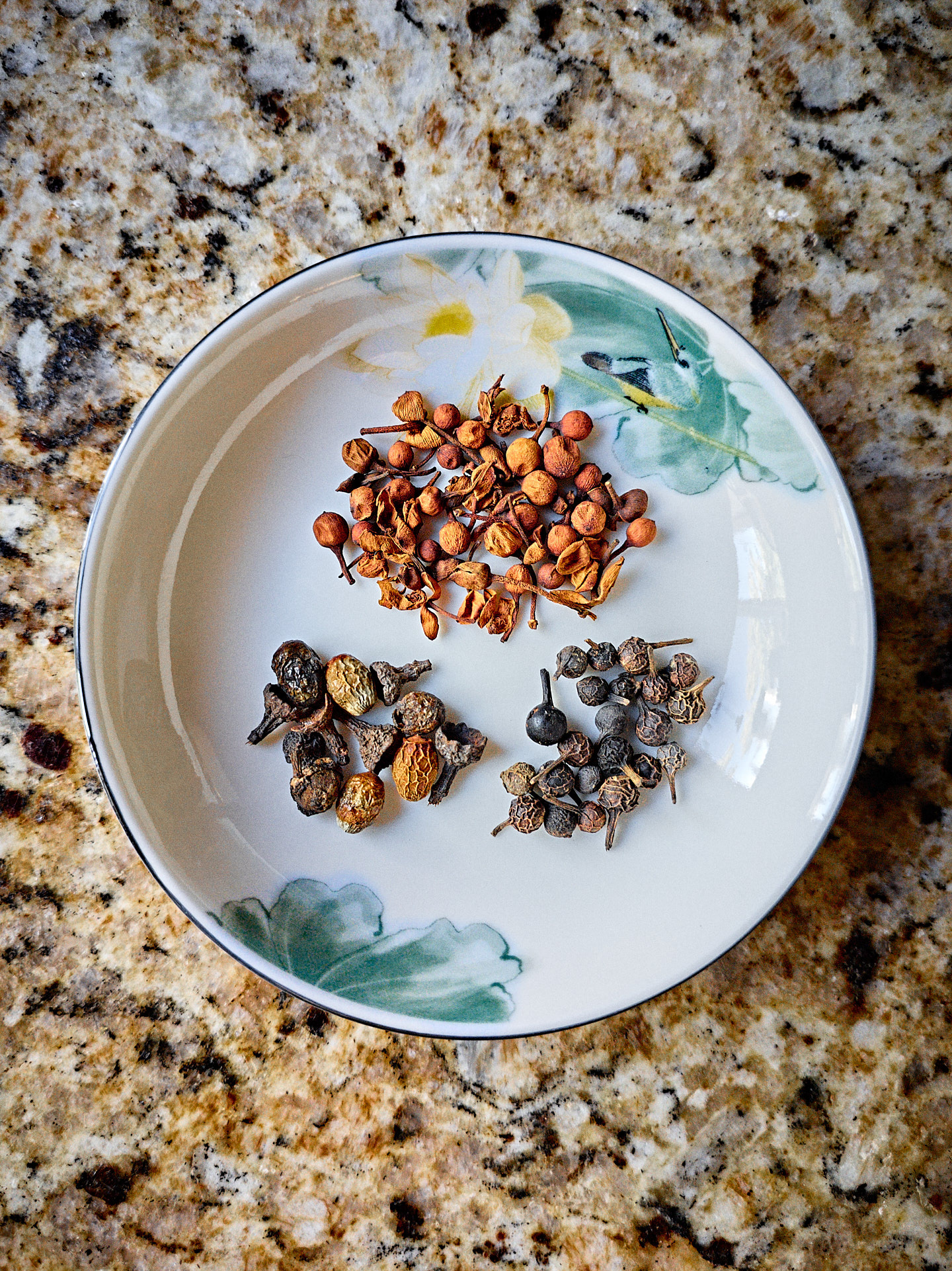
Figure 1. Comparison of Mesua ferrea (Ceylon ironwood buds), Cinnamomum cassia (cassia buds), and Piper cubeba (cubeb) as they relate to the historical ambiguity of nagkesar. Personal photograph by Ronald N. Tan, September 25, 2024.
Even the contributing authors and editors of The Bloomsbury Handbook of Indian Cuisine haven't definitively identified what nagkesar is. On page 73, nagkesar appears in the Cassia section:
Cassia bark was sometimes used to perfume drinking water. The buds, called nagkesar in Hindi, are the unopened flowers of the tree. They are picked just before blooming and dried in the sun. Their unique flavour is close to that of cinnamon but more flowery. They are used whole for flavouring spicy dishes and pulao, and ground for use in masalas.¹
On page 350, nagkesar is listed as an ingredient in East Indian Bottle Masala:
Bottle masala: A speciality of the East Indian Catholic community is the aromatic bottle masala which is said to consist of from twenty-five to thirty to up to sixty spices and herbs, including allspice, black pepper, caraway seeds, cardamom, cinnamon, clove, cumin, poppy seeds, sesame, wheat and chickpeas, and the rare dagar [sic] phool (stone lichen), maipatri (mugwort), tiraphal (pepper leaves) and bulbs of the nagkesar flower (Mesua ferrea L.).²
In addition, Fernandez provides a descriptive account of dried flower buds also called nagkesar, noting its use in Maharashtrian and Konkan cuisine:
Nag kesar are the dried flower buds of Mammea longifolia [syn. Ochrocarpus longifolius], a handsome evergreen that is endemic to the Western Ghats of southern India. They are similar in appearance to cloves and have a woodsy sort of flavour. … Well known in Ayurveda for its medicinal properties, it is often confused with another Ayurvedic element, the buds of Mesua ferrea or The Ceylon Ironwood tree, that are confusingly also called Nag Kesar.³
A review of Indian herbal trade practices notes that Ochrocarpus longifolius (syn. Mammea longifolia) has also been used as a substitute for Mesua ferrea, with immature buds sold as a “red” form of nagkesar, further compounding the historical ambiguity in both culinary and Ayurvedic contexts.⁴
On page 912 of College Botany (Volume III) by B. P. Pandey:
The dried immature fruits constitute the well known 'Cassia buds', known in India as Kala Nagkesar.⁵
In the book Masaleydaar: Classic Indian Spice Blends by Nandita Godbole:
Nag kesar: Like the unopened buds of cloves, the buds of Messua ferra [sic] are called Nag kesar. They impart a camphor-like aroma to a masala and are used sparingly.⁶
In Pangat, a Feast: Food and Lore from Marathi Kitchens by Saee Koranne-Khandekar, she lists nagkesar's English name as "cobra saffron."⁷
In The Essential Marathi Cookbook by Kaumudi Marathé and Rare Gems: A Non-vegetarian Gourmet Collection from Maharashtra by Aditya Mehendale, nagkesar is mentioned as "cassia buds."⁸
Describing anything that resembles "peppercorn with a tail" is referring to Piper cubeba. Its common English names are tailed pepper or cubeb.
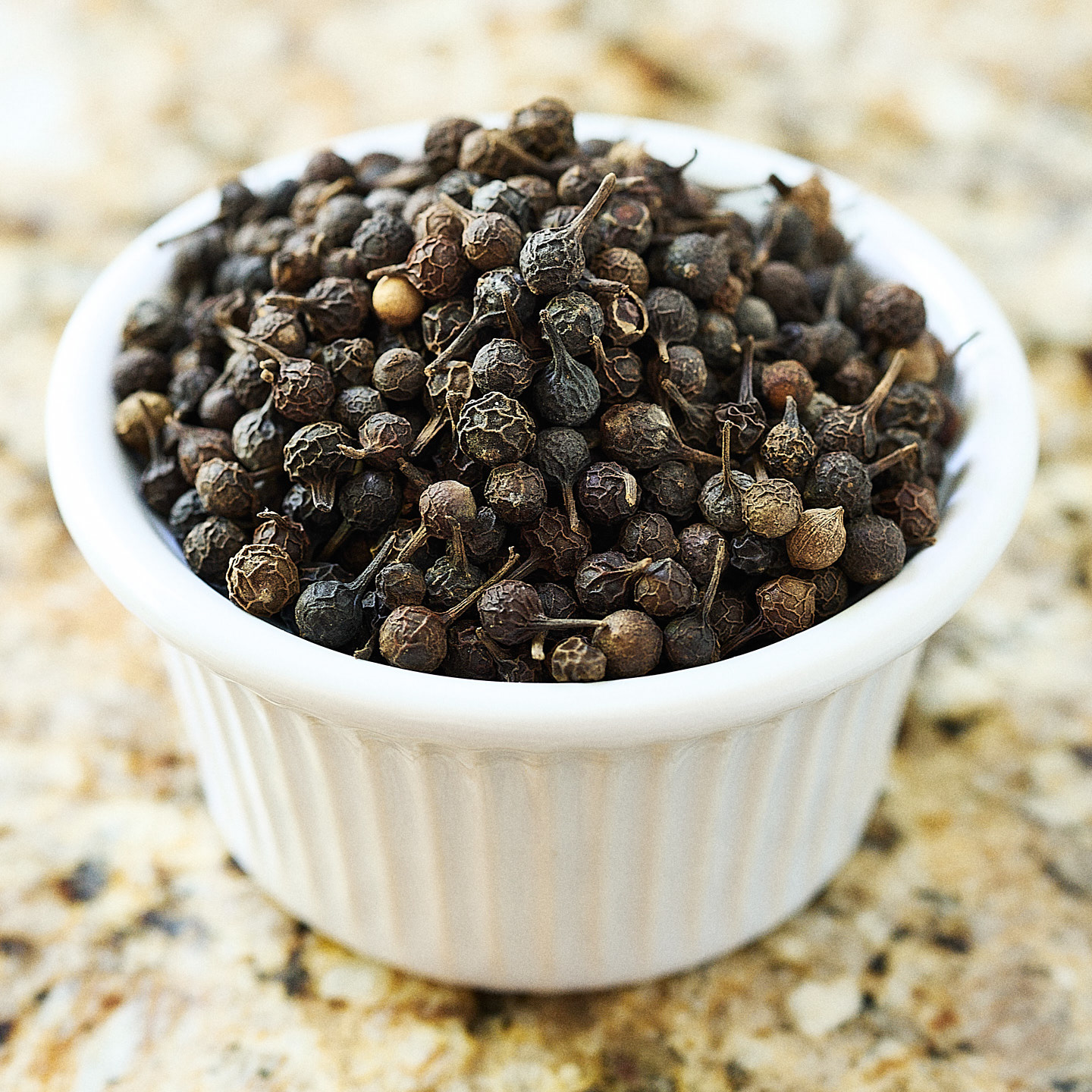
Figure 2. Close-up of Piper cubeba (cubeb) showing the distinctive stalk or "tail," a feature described by Niloufer King when recounting the "nagkesar" she sourced. Personal photograph by Ronald N. Tan, April 16, 2025.
From My Bombay Kitchen: Traditional and Modern Parsi Home Cooking by Niloufer Ichaporia King (page 38):
… tiny amounts of hard-to-find spices like nag kesar, or snake saffron—often mistranslated as "saffron," but a totally different thing, resembling a peppercorn with a tail. … Should you be determined, and should you be able to find them, add one teaspoon of the duggar ka phul and half a teaspoon of nag kesar.⁹
In the 1893 Pharmacographia Indica, Dymock unambiguously describes kala nagkesar as the immature fruit of the cassia trees imported into Bombay (present-day Mumbai) from China and Southern India. He notes that native druggists (herbalists, Ayurvedic, and Unani practitioners) in Madras (present-day Chennai) often substituted Cinnamomum cassia for nagkesar ke phul—the dried flowers of Mesua ferrea and Ochrocapus longifolius [syn. Mammea longifolia]—because the actual dried flower buds were seldom available in spice shops. The Handbook on Spices and Condiments identifies cassia buds as kala nagkesar, corroborating Dymock’s account. This longstanding distinction—Mesua ferrea for classical Ayurvedic use and Cinnamomum cassia for everyday culinary purposes—explains the historical ambiguity and confusion surrounding nagkesar.¹⁰
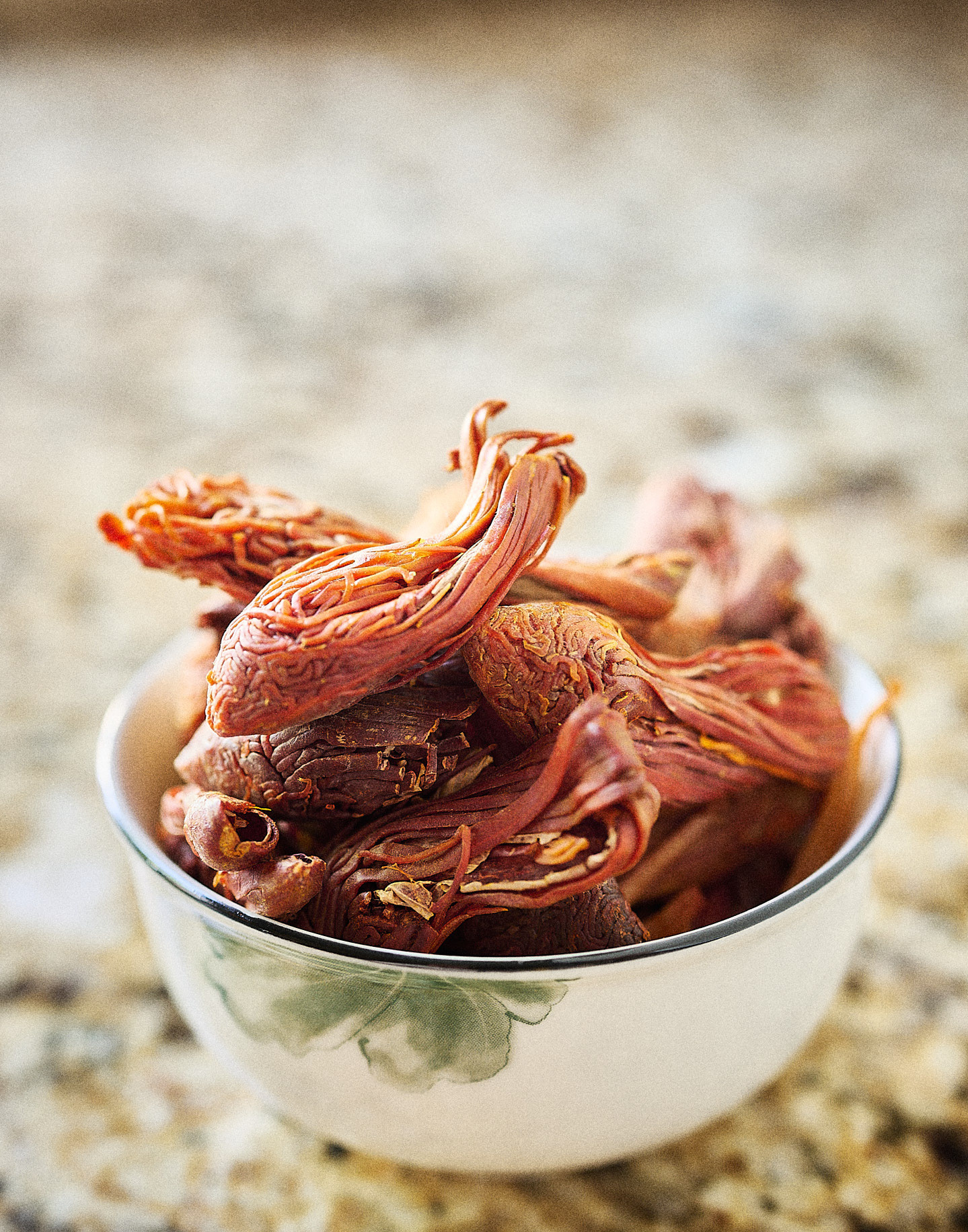
To resolve the confusion surrounding nagkesar in recipes, I now use equal parts of Mesua ferrea and Cinnamomum cassia. Visually, the two are easily distinguishable: Mesua ferrea, or Ceylon ironwood buds, are reddish, while Cinnamomum cassia resembles enlarged, black cloves. This combination captures both the delicate floral-camphor aroma of Mesua ferrea and the warmer, deeper notes of Cinnamomum cassia, approximating the flavor profile historically sought in regional masale.
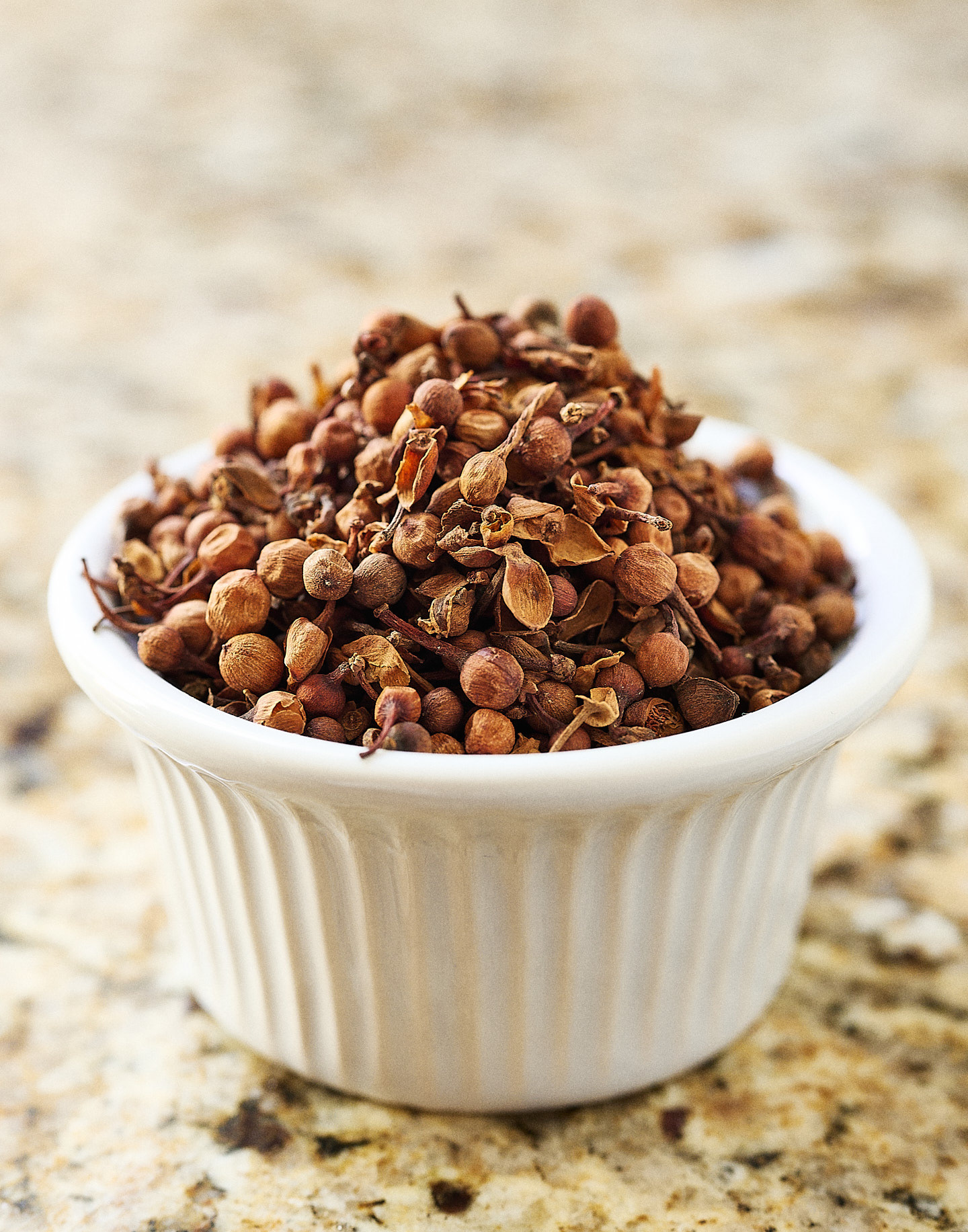
Figure 3. Close-up of Mesua ferrea (Ceylon ironwood buds), the reddish spice advocated for designation as nagkesar. Personal photograph by Ronald N. Tan, April 16, 2025.
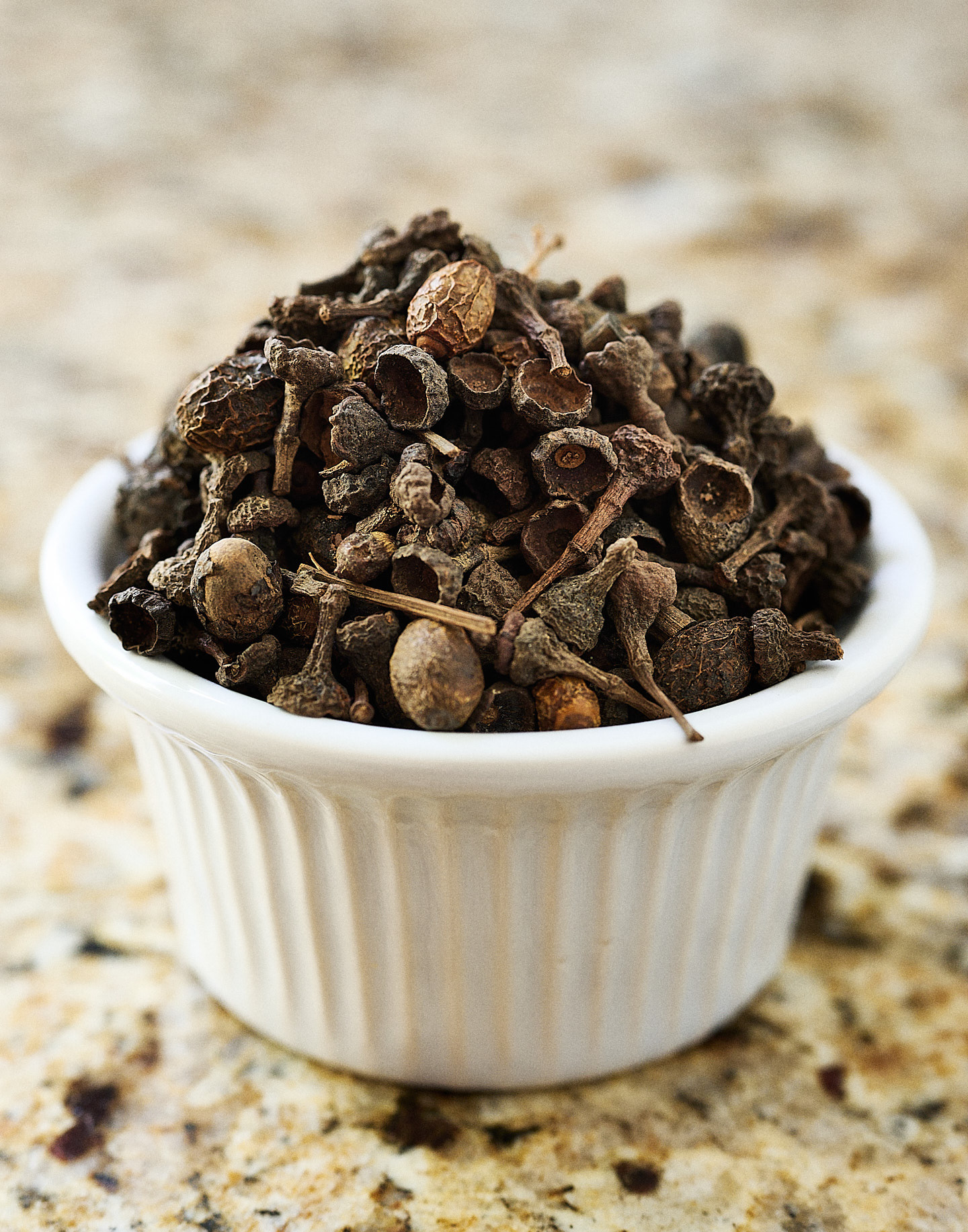
Figure 4. Close-up of Cinnamomum cassia (cassia buds), the dark, enlarged clove-like spice widely identified as Kala nagkesar. Personal photograph by Ronald N. Tan, April 16, 2025.
A viable and practical solution going forward is to designate Mesua ferrea as nagkesar, with English common names of Ceylon ironwood buds and/or cobra saffron. Kala nagkesar is defined as Cinnamomum cassia, using its widely accepted name of cassia buds (Pandey, College Botany, 912). This solution allows chefs and home cooks to communicate clearly, source ingredients reliably, and maintain the Ayurvedic and culinary integrity of traditional recipes, while respecting the historical and regional variations in usage. Nagkesar, whether Mesua ferrea, Cinnamomum cassia, or both, is a reminder that masale are living entities of culture, culinary history, and taste. Mesua ferrea, please stand up and take a bow. Cinnamomum cassia, please stand up. Ochrocarpus longifolius (syn. Mammea longifolia), please remain seated. Thank you.
Notes
1. Colleen Taylor Sen, Sourish Bhattacharyya, and Helen Saberi, eds., The Bloomsbury Handbook of Indian Cuisine (New York: Bloomsbury USA Academic, 2023), 73.
2. Sen, Bhattacharyya, and Saberi, Bloomsbury Handbook, 350.
3. Morvarid Fernandez, Seasoned for Family and Friends: Contemporary Recipes with an Old World Flavour and Reminiscences and Vignettes of Life in Provincial India (Notion Press, 2016).
4. Hariqbal Singh Puri, V. P. Singh, and Ashok K. Singhal, eds., Indian Herbal Remedies: Rational Western Therapy, Ayurvedic and Other Traditional Usage, Botany (Berlin: Springer, 2011), 119.
5. B. P. Pandey, College Botany, Volume III (India: S Chand & Company Limited, 2022), 912.
6. Nandita Godbole, Masaleydaar: Classic Indian Spice Blends (United States: Turmeric Press, a division of Curry Cravings LLC, 2023).
7. Saee Koranne-Khandekar, Pangat, a Feast: Food and Lore from Marathi Kitchens (Gurgaon: Hachette India, 2019).
8. Kaumudi Marathé, The Essential Marathi Cookbook (New Delhi: Penguin Books, 2009); Aditya Mehendale, Rare Gems: A Non-vegetarian Gourmet Collection from Maharashtra (New Delhi: Om Books International, 2015).
9. Niloufer Ichaporia King, My Bombay Kitchen: Traditional and Modern Parsi Home Cooking (Berkeley: University of California Press, 2007), 38.
10. William Dymock, C. J. H. Warden, and David Hooper, Pharmacographia Indica: A History of the Principal Drugs of Vegetable Origin, Met with in British India (India: K. Paul, Trench, Trübner & Company, 1893), 210; Handbook on Spices and Condiments (Cultivation, Processing and Extraction) (Asia Pacific Business Press Inc., 2010), 316.
Bibliography
Dymock, William, C. J. H. Warden, and David Hooper. Pharmacographia Indica: A History of the Principal Drugs of Vegetable Origin, Met with in British India. India: K. Paul, Trench, Trübner & Company, 1893.
Fernandez, Morvarid. Seasoned for Family and Friends: Contemporary Recipes with an Old World Flavour and Reminiscences and Vignettes of Life in Provincial India. Notion Press, 2016.
Godbole, Nandita. Masaleydaar: Classic Indian Spice Blends. United States: Turmeric Press, a division of Curry Cravings LLC, 2023.
Handbook on Spices and Condiments (Cultivation, Processing and Extraction). Asia Pacific Business Press Inc., 2010.
King, Niloufer Ichaporia. My Bombay Kitchen: Traditional and Modern Parsi Home Cooking. Berkeley: University of California Press, 2007.
Koranne-Khandekar, Saee. Pangat, a Feast: Food and Lore from Marathi Kitchens. Gurgaon: Hachette India, 2019.
Marathé, Kaumudi. The Essential Marathi Cookbook. New Delhi: Penguin Books, 2009.
Mehendale, Aditya. Rare Gems: A Non-vegetarian Gourmet Collection from Maharashtra. New Delhi: Om Books International, 2015.
Pandey, B. P. College Botany (Volume III). India: S Chand & Company Limited, 2022.
Puri, Hariqbal Singh, V. P. Singh, and Ashok K. Singhal, eds. Indian Herbal Remedies: Rational Western Therapy, Ayurvedic and Other Traditional Usage, Botany. Berlin: Springer, 2011.
Sen, Colleen Taylor, Sourish Bhattacharyya, and Helen Saberi, eds. The Bloomsbury Handbook of Indian Cuisine. New York: Bloomsbury USA Academic, 2023.